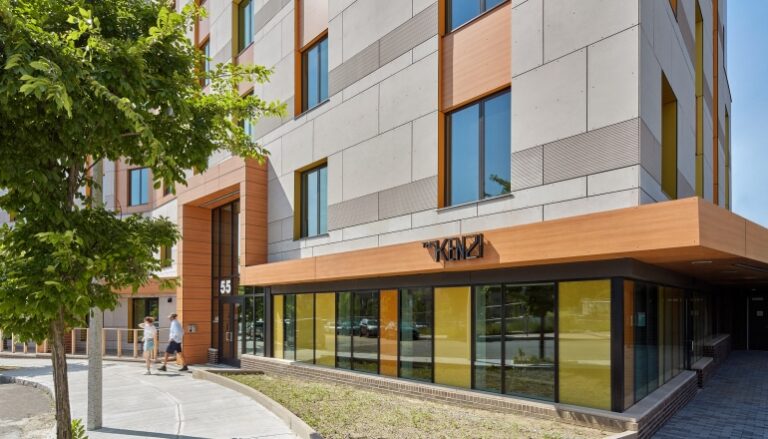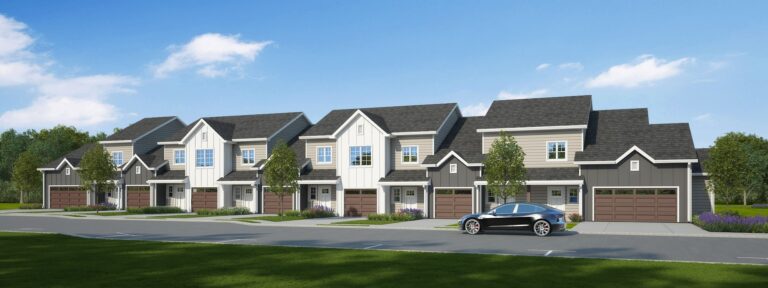
Modular construction bridges traditional site-built construction and manufacturing, leveraging the best practices of each for greater efficiency. “Modular” generally refers to volumetric, three- dimensional boxes (modules) fabricated off-site, but also can refer to other off-site construction methods, such as the manufacturing of panelized and other smaller building components. Modular construction can be applied to single-family, multifamily, commercial, and industrial buildings. Modular structures may be permanent or relocatable.
Work at the physical construction site—where the completed final structure will ultimately be occupied—includes preparation, foundation work, and running of utilities. Building components like walls, floors, and roofs are fabricated simultaneously in a factory in an assembly-line like process. These modules are then transported and delivered to a site and integrated into the foundations to create the final structure. The integration may include connecting all building components like a set of Legos or placing a stand-alone turn-key structure delivered with completed mechanical, electrical, plumbing systems as well as interior finishes and fixtures.
Modular construction utilizes the same materials as traditional site-built construction. Modules are standardized to streamline the process but can be customized and designed to be architecturally indistinguishable from adjacent site-built structures. While some nations (Canada) and several states—Montana, Utah, and Virginia—have adopted modular building codes, the U.S. does
not have a singular national modular building code. While manufactured housing built with a permanent chassis is subject to a building code promulgated by the Department of Housing and Urban Development (the “HUD Code”), all other buildings are regulated at the state and local levels.
Key benefits to utilizing modular construction methods include:
- Accelerated Construction Timelines: Simultaneous factory production and site preparation can significantly reduce timelines, minimizing costs related to financing, permitting, and temporary housing for workers. Moreover, since modules are built indoors, costly weather-related delays are minimized.
- Mass Production & Economies of Scale: Since modules are built in a factory setting, materials can be bought in bulk at lower costs, and labor can be utilized more efficiently.
- Reduced Labor Costs: Factory-based construction can reduce the need for expensive onsite labor. It also allows for a more controlled environment where tasks are standardized, potentially reducing labor costs.
- Less Material Waste: Factories can optimize material usage and more easily repurpose excess materials for future projects compared to traditional construction methods, where excess materials must be transported away from the assembly site.
- Lower Site Preparation and Logistics Costs: Because a large portion of the work is completed off-site, the need for extensive site work, storage, and staging areas is reduced, cutting down expenses on logistics and site management.
- Standardization & Design Efficiency: Modular homes often follow standardized designs that streamline production. This lowers architectural and engineering costs compared to custom-built homes. It can also help reduce maintenance costs for building operators, since it is easier to determine how to fix or replace certain components.
- Energy Efficiency & Sustainability: Modular designs often incorporate energy-efficient materials and construction techniques, reducing long-term operational costs for heating, cooling, and maintenance.
Despite these benefits, modular construction faces several obstacles limiting its adoption and deployment:
- Logistics: Modular requires transportation from the manufacturing site to the assembly site, with costs increasing based on distance traveled. Some modular structures may also be too big to transport without special planning and permitting; others will require special permits and inspections to travel across state lines. Finally, smaller streets and density in some American cities may complicate the delivery and installation of modular.
- Perception: Given the structure of housing development, where decisions are made by owners, general contractors, and architects, multiple parties need to be enthusiastic in choosing modular as the means of construction for a particular project. For owners, general contractors, and architects unfamiliar with modular and concerned about minimizing risks, it can be challenging to introduce new techniques and materials into the construction process. Organized labor may also resist the adoption of modular construction because it can reduce the reliance of builders on certain skilled trades.
- Regulations and Compliance: Without a national building code, modular is subject to the regulations of different localities. Because modules for development are built in one geography and delivered in another, the lack of a uniform building code can increase compliance costs for developers who need to work with building inspectors in the jurisdiction where the housing will be built. Even minor differences in code requirements can require additional customization of modular homes, further increasing costs.
- Upfront Costs: The cost to build a volumetric modular factory is estimated at $40-$50 million—depending on size, location, and equipment used. This is a significant investment that many private manufacturers will be unwilling to make unless they are confident in a long-term pipeline of demand in a region. Modular manufacturers will typically require a down payment of 30–40% from the ultimate purchaser, higher than traditional suppliers of building materials.